Thursday, May 4, 2023

May 3- Wednesday 4th week of Easter
May 3: Saints Philip and James, Apostles—Feast
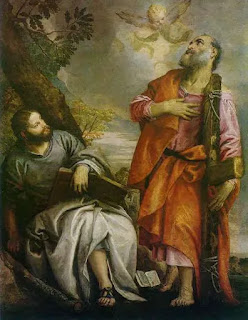
Philip said to Jesus, “Master, show us the Father, and that will be enough for us.” Jesus said to him, “Have I been with you for so long a time and you still do not know me, Philip? Whoever has seen me has seen the Father. How can you say, ‘Show us the Father’?” John 14:8–9
Today’s liturgical feast is in honor of two of the Apostles, Philip and James the Lesser.  Little is known about James other than that he was chosen by our Lord for the apostolic ministry and that we have one of his letters, which is contained in the New Testament.  James eventually went to Jerusalem and led the Church for a few decades until he was stoned to death as a martyr. Philip preached in Greece, Phrygia and Syria.  He and Saint Bartholomew were thought to have been crucified upside down. Philip preached upside down from the cross until his death.
In the Gospel for today’s Mass, we are presented with an encounter that Philip had with Jesus. Though this encounter appears to be a rebuke of Philip by Jesus, it’s a rebuke that is quite heartfelt. Jesus says, “Have I been with you for so long a time and you still do not know me, Philip?” Jesus did, indeed, spend much time with His disciples. They stayed together, ate together, traveled together and spent much time talking with each other. Therefore, Jesus’ comments to Philip emanated from His real and lived personal relationship with Philip.
Take the first part of that statement to begin with. “Have I been with you so long…” Imagine Jesus saying this to you. Is this something He would be able to say to you? Is it true that you do spend much time with Him? Do you spend time reading the Gospels, speaking to Him from the depths of your heart, conversing with Him, praying to Him and listening to His gentle voice?
But Jesus goes on: “…and you still do not know me…?” This is a humble truth that is important to admit. It is true that even those who have a very deep and transforming life of prayer do not know our Lord deeply enough. There is no limit to the transformation that can take place in our lives when we know Jesus personally.
Jesus’ statement goes on: “Whoever has seen me has seen the Father.” So the next question is this: “Do you know the Father?” Do you know the Father’s love, His care for you, His perfect will? Though the Father and the Son are united as one God, They are still distinct Persons, and we must, therefore, work to establish a relationship of love with each one of them.
As initially mentioned, the comments from Jesus are a gentle rebuke of love to Philip, and He wants to speak this same gentle rebuke to you. But it’s a rebuke of love meant to encourage you to get to know Him better. It’s an invitation to personalize your relationship with Jesus and the Father in a real and concrete way. Do you know Him? Do you know the Son of God? Do you know the Father in Heaven?
Reflect, today, upon these loving questions of our Lord as if they were spoken to you. Let His words encourage you to get to know Him more deeply. Pray for your relationship to become more personal and transforming. And as you get to know our Lord more intimately, know that it is also the Father in Heaven Whom you are getting to know.
My divine and personal Lord, it is the deepest desire of Your Sacred Heart to know me and to love me. Fill my heart with this same desire so that I will not only know You, dear Lord, but also the Father in Heaven. Heavenly Father, I thank You for Your perfect love and pray that I may open myself to that love more fully each and every day. Saints Philip and James, pray for me. Jesus, I trust in You.
 
May 3: Saints Philip and James, Apostles—Feast
The next day he decided to go to Galilee, and he found Philip. And Jesus said to him, “Follow me.” Now Philip was from Bethsaida, the town of Andrew and Peter. Philip found Nathanael and told him, “We have found the one about whom Moses wrote in the law, and also the prophets, Jesus, son of Joseph, from Nazareth.” But Nathanael said to him, “Can anything good come from Nazareth?” Philip said to him, “Come and see.” ~John 1:43–46
In the sixth century, Pope Pelagius I traveled to Constantinople and brought the relics of the Apostles Philip and James back to Rome, placing them in what is today called the Church of the Holy Apostles. It is for this reason that we honor these two Apostles together with one feast.
Saint Philip was one of the Twelve Apostles. He was most likely a follower of Saint John the Baptist and was aware of John pointing to Jesus as the Messiah. Philip might have been a brother to Simon Peter and Andrew, making him a fisherman by trade. The day after Simon and Andrew were invited to follow Jesus, Jesus encountered Philip and said, “Follow me” (John 1:43). Philip obeyed. He was from the town of Bethsaida, just north of the Sea of Galilee. Philip’s first act of evangelization was to tell his friend, Nathanael, that they had found the Messiah. Nathanael was reluctant at first, stating to Philip, “​​Can anything good come from Nazareth?” Philip’s response was ideal. He said to his friend, “Come and see” (John 1: 46). When Nathanael came and saw, he immediately professed his faith in Jesus as the Messiah, the Son of God. Early Church theologians believe that Philip followed our Lord from that time forward, witnessing Jesus’ first miracle at Cana.
When Jesus established the Twelve, Philip was among them. He is mentioned in John’s Gospel during the feeding of the 5,000 when Jesus sees the large crowd and then turns to Philip and says, “Where can we buy enough food for them to eat?” (John 6:6). Philip is also mentioned in connection with Greek-speaking Gentiles who want to see Jesus (see John 12:21), possibly indicating that Philip could speak Greek and was known to the Greek community. At the Last Supper, as Jesus was speaking about the Father, Philip said to him, “Master, show us the Father, and that will be enough for us”, to which Jesus gently responded, “Have I been with you for so long a time and you still do not know me, Philip? Whoever has seen me has seen the Father” (John 14:8–14).
After Pentecost, little is known about Philip’s missionary activity. Ancient traditions state he preached in Greece, Phrygia, and Syria, being martyred at an old age in Hierapolis, Phrygia, modern-day southwest Turkey, not far from Ephesus where Saint Paul established a church. Philip is believed to have died either by being crucified upside down or by beheading.
Saint James is also one of the Twelve. The traditional view, from as early as the second century, is that there are only two disciples of Christ in the New Testament with the name James. Some modern scholars identify three or more. If we stick with the traditional view, which was also held by Saint Jerome in the fourth century, then the two Jameses are James the Son of Zebedee and James the Less (also referred to as James the brother of the Lord, and James the Son of Alphaeus). Later authors call him James the Just. If James the Less is also the James who is the Lord’s brother, then James’ father was Alphaeus and his mother was Mary of Clopas, the sister of the Blessed Virgin Mary. This would make James the nephew of the Blessed Virgin and a first cousin to Jesus. He is referred to as Jesus’ “brother” because it was common at that time to refer to cousins and other relatives as brothers and sisters. In Mark’s Gospel, Levi (better known as Matthew) is also referred to as the son of Alphaeus (Mark 2:14) which could make James and Matthew brothers.
In his letter to the Corinthians, Saint Paul relates that the Lord appeared to James after His Resurrection (1 Corinthians 15:7). After Pentecost, James became the first bishop of the Church in Jerusalem. The Acts of the Apostles relates that it was James, as the head of the Jerusalem Church, who oversaw the First Council of Jerusalem and declared the final judgment on behalf of Peter (see Acts 15). Eusebius, a fourth-century bishop, writes that James spent long hours in the Temple of Jerusalem: “…he was in the habit of entering alone into the temple, and was frequently found upon his knees begging forgiveness for the people, so that his knees became hard like those of a camel.” Eusebius also wrote about James’ martyrdom, “…he was thrown from the pinnacle of the temple, and was beaten to death with a club.” Traditionally, the New Testament letter of James is believed to have been written by James the Less, although modern scholars question this fact. That letter was a general letter, most likely sent to all of the Jewish Christian communities. It begins, “James, a slave of God and of the Lord Jesus Christ, to the twelve tribes in the dispersion, greetings” (James 1:1). The letter then goes on to give encouragement in trials and persecutions, exhortations and warnings, and concludes by speaking of the power of prayer.
What we know for certain about these two disciples is that they were among the Twelve Apostles. They were uniquely chosen by the Savior to continue His divine mission of evangelizing the world. They embraced their ministry heroically, establishing communities of believers, preaching the Gospel, offering the sacraments, performing miracles, and governing the early Church. Allow the apostolic zeal and the courageous martyrdom of these apostles to inspire you today with the same zeal and courage, so that God can also send you forth on mission.
Saints Philip and James, you were both highly blessed to be companions of the Lord Jesus, listening to Him preach, witnessing His miracles, and receiving from Him a commission to continue His work. Please pray for me, that I will also come to know our Lord and Savior through prayer and the Holy Scriptures, so that I will be prepared for the mission that God has for me. Saints Philip and James, pray for me. Jesus, I trust in You.


Suy Niệm Tin Mừng Thứ Tư Tuần thứ 4 Phục Sinh

Suy Niệm Tin Mừng Thứ Tư Tuần thứ 4 Phục Sinh
Trong đoạn Tin Mừng hôm nay  Thánh Gioan cho chúng ta thấy những điểm chính của nhũng bài giảng Chúa Giêsu muốn dạy chúng ta trước Ngài bắt đầu bước vào cuộc hành trình với sự thương khó, cái chết và sự  phục sinh của Chúa Giêsu. Trong đó bao gồm phần tóm lược các nhiệm vụ của Ngàinhững lời mời gọi đến đức tin. Thứ nhất, ơn gọi đến vói đức tin không phải chỉ là những gì trong thể chất con người của Thiên Chúa được đóng ấn đi kèm trong con người của Chúa Giêsu. Nhưng nó được toả lan ra bên ngoài, vì mục tiêu của họ là Chúa Cha, Đấng đã mạc khải chính mình Ngài trong Chúa Giêsu.  Thứ hai, chính Chúa Giêsu đã thực hiện sứ mệnh của Ngài và Ngài luôn luôn nhận thức rằng ông đại diện cho Cha của Ngài, và do đó, để chiêm ngưỡng Chúa Giêsu trong đức tin là để nhận ra Ngài là người đã tiết lộ cho chúng ta về Chúa Cha. Thứ ba, để tin vào Chúa Giêsu là để được giải thoát  ra khỏi bóng tối, thật vậy, vì nếu như chúng ta không Tin vào Thiên Chúa và chúng ta tự  từ bỏ chính mình và vì tội lỗi sẽ làm chúng ta xa lánh Thiên Chúa. Thứ Tư là khi chúng ta từ chối Chúa Giêsu và Giáo huấn của Ngài, chúng ta sẽ bị lên án chính chúng ta và trở nên xa lạ với Thiên Chúa. Chúa Giêsu chỉ cứu rỗi những người  biết ăn năn và hối cải.
            Qua những sách giáo lý dạy cho thấy rằng Chúa Giêsu đã vâng lời Chúa Cha và hoàn thành nhiệm vụ Chúa Cha đã sai khiến. Nếu trong quá khứ, những lời của Thiên Chúa, đã được truyền đạt tới dân Israel bởi ông isen,  và ông Môisen là phương tiện mà Chúa bày tỏ chính Ngài cho dân riêng của Ngài, Thì hôm nay Thiên Chúa đã sai con một của Ngài xuống thế với chúng ta trong ngôi Hai nhập thể để nói giáo huấn con người chúng ta.  Tất cả những ai đã chấp nhận Thiên Chúa và đến để được chia sẻ trong sự sống với Chúa Giêsu trong Thiên Chúa Cha. Nếu như đấy chính là Chúa Giêsu, và tất cả những gì Ngài đã làm, thì những điều đấy sẽ được tỏ ra cho  chúng ta thấy ai là Thiên Chúa, và những gì Thiên Chúa đã làm vì Chúa Giêsu đã nói bằng Lời Nói bằng những hành động để cho chúng ta thấy được Chúa Cha. Để biết Chúa Giêsu là để biết được Chúa Cha ở ngay trong tâm hồn của mỗi con người chúng ta.. lạy Chúa Cha, Xin cho chúng con nhận biết Chúa Giêsu để chúng con có thể cũng nhận biết được Chúa là Thiên Chúa của chúng con.


 Wednesday 4th week of Easter 2023
Opening Prayer: Good Father, you so loved the world that you gave your only Son, so that everyone who believes in him might not perish but might have eternal life. Father, thank you for your Son. Thank you for Jesus. 
Encountering Christ:
 
1.      The Holy Spirit: To cry has many meanings. It means to lament and weep in tears, to call out loudly, to strongly plead, to beg. Jesus was doing all of these. The hour was soon coming when he would be turned over to the authorities to be tortured and crucified, and he knew it. Forces had been aligning against him and increasing in hostility. One of the dangers came from his own friend. From the beginning of John’s Gospel, this moment was prophesied: “He came to what was his own but his own people did not accept him” (John 1:11). Jesus knew many would not accept him and yet begging, pleading, weeping for souls, he cried out, “I came into the world as light, so that everyone who believes in me might not remain in darkness.” How often do we contemplate the awesome reality of how far God goes to draw us to him? This reality can console us when our efforts to catechize our children and evangelize others appear futile. We do not give up. We cannot usually cry out as Jesus did, but we can cry out to Our Father in Jesus’ name and ask for courage and perseverance. “As proof that you are children, God sent the spirit of his Son in our hearts, crying out, ‘Abba, Father!’ So you are no longer a slave but a child, and if a child then also an heir, through God” (Galatians 4:6).
2.      The Word: Jesus had healed the sick. He had fed the hungry. He had brought the dead back to life. He had preached the Good News: “Amen, amen, I say to you, whoever hears my word and believes in the one who sent me has eternal life and will not come to condemnation, but has passed from death to life” (John 5:24). We meditate on these truths in Scripture frequently. We have the Bible, the traditions of the Church, and the writings of saints over more than 2,000 years to strengthen our belief. Through living by the Word, we do not condemn ourselves but hope for the promise of eternal life. This hope is a source of joy for faithful Christians. Padre Pio advises us to “Pray, hope, and don’t worry.”
3.      Our Father: Jesus tells us, “…I did not speak on my own, but the Father who sent me commanded me what to say and speak. And I know that his commandment is eternal life. So what I say, I say as the Father told me.” In the USCCB document The Mystery of the Eucharist in the Life of the Church, the bishops stated, “The mission of the Lord’s entire life on earth was to glorify the Father by bringing us salvation.” The bishops explained that the Son of God was the Father’s gift, and how we receive this gift determines our path to salvation. “To begin to comprehend the tremendous gift offered by Christ through his Incarnation, death, and Resurrection, that gift which is made present to us in the Eucharist, we must first realize how truly profound is our alienation from the source of all life as a result of sin.” The more we recognize sin for what it is, the more grateful we are for our redemption, accomplished by Ch rist. The Father’s gift of his Son is both the path to salvation fueled by the Eucharist and the remedy for every obstacle that prevents our progress through the sacrament of Reconciliation. 
Conversing with Christ: Lord, I so often become discouraged, believing Satan’s lies that it is up to me to ascend in holiness. I know that the only way is always and only you. I want to receive you as our Father’s gift. I cannot earn your love. I already have it. My response should always be gratitude to the Father and eagerness to take advantage of the sacraments. 
Resolution: Lord, today by your grace I will make a plan to receive the sacrament of Reconciliation this week, to remove the obstacles that keep me from seeing your light on my path to salvation. 
 
Wednesday 4th week of Easter 2021
Opening Prayer: Lord, thank you for this opportunity to grow in my understanding of your word. Bless me as I ponder these lines of Scripture and try to grow closer to you.
Encountering Christ:
1. Knowing the Father: Jesus “cried out” to teach us that we have a Father who loves us in heaven. Jesus told us over and over throughout the Scriptures how much the Father loves us, but the brokenness of the world and within ourselves can make that truth hard to accept. Perhaps we have a bad image of what a father is because of something we have suffered personally. Perhaps the negativity that the world projects about fathers has confused us. Perhaps we are convinced by the devil’s lies that the Father doesn’t really love us or have our best interest at heart. The words of Jesus are trustworthy. Our Father in heaven loves us without limit. If we could just live as if we believed in that one truth, we would be transformed and our salvation would be assured.
2. Loving, Not Condemning: Jesus came not to condemn us, but he tells us that condemnation will be ours if we ignore the words the Father gave him to speak. We find all of the Lord’s truths–well-articulated, concise, and as relevant today as they have ever been–in the teachings of the Church, summarized in the Catechism. Are we students of the Catechism? How well do we know our faith? Living by these words will save us from condemnation. 
3. Living without a Father?: People worry about many things, from the very mundane to matters of life and death. When we worry, are we behaving like we have a Father in heaven who loves us more than we can imagine? If we are in his hands, what could threaten us? We need to embrace this truth, if we haven’t already because Our Lord is asking us to help others know the Father by our words and actions. 
Conversing with Christ: Lord, I say the “Our Father” so often that it has become rote. Send your Spirit to enlighten me so that my faith in the Father grows stronger. I want to love the Father as you do. 
Resolution: Lord, today by your grace I will say the “Our Father” slowly with meaning, before the tabernacle if possible.
 
Reflection 2016
In the scriptures, light is equated with God's truth and life.  Just as light exposes what is hidden in the darkness, so does God's word enable those with faith, to perceive the truths of God's kingdom.  Light also allows living things to grow, just as God's word breathes life to those who receive it with faith.
            In today's Gospel, John tells us that Jesus came to bring light into the world, not to judge mankind.  It is clear however, that to reject Jesus, is tantamount to rejecting God, and bringing judgment upon oneself.  Jesus was sent to bring life and freedom to those who accept Him.  
            Whoever encounters Jesus and follows Him, walks in God's life-giving light.
"Come, Lord Jesus Christ. Be with us now. Come and renew us. Come, oh, Prince of Peace. Dwell in our hearts. Come, be our way, our truth, and life. Conquer the night. Come, be our light, Emmanuel." ("Come Be Our Light," Manoling Francisco, S.J.)

Suy Niệm Tin Mừng lễ Thánh Giuse Thợ (May 1)

 Suy Niệm Tin Mừng lễ Thánh Giuse Thợ (May 1)

Hôm nay, chúng ta mừng lễ thánh Giuse Thợ, một người thợ mộc nghèo hèn ở làng Nazareth, một người lao động gương mẫu, biết giữ mái ấm gia đình và phát triển nghề nghiệp của mình. Đây là cách sống bình thường của mọi người trong thế giới hôm nay của chúng ta, Mỗi người phải biết làm lũng kiếm ăn bằng chính mồ hôi lao động.
            Theo Công tế Nhân quyền cho chúng ta biết rằng mỗi người chúng ta đều có quyền làm một công việc và được trả công. Hôm nay, Hội Thánh cầu nguyện cho ngày quốc tế lao động, để mỗi người lao động có thể thực hiện đầy đủ nhiệm vụ của mình và được sống đúng với cái quyền làm người.
Qua bài một Tin Mừng hôm nay, Phúc âm giới thiệu Chúa Giêsu là “con bác thợ mộc” (Mt 13:56), tại quê hương của Ngài là làng Nazareth, nơi Chúa đã  lớn lên và trưởng thành. Tuy nhiên, người Nazareth vẫn chưa thực sự biết rõ con người của Chúa Giêsu. Họ có thể nghĩ rằng họ biết Ngài rất rõ, rất nhiều, nhưng họ thực sự không biết gì cả. Đấy là lý do tại sao họ không thể giải thích được là từ đâu mà Chúa Giêsu nhận được sự khôn ngoan và có uy quyền đặc biệt.
               Nhưng, với người Kitô hữu chúng ta, chúng ta có biết được đầy đủ về con người Chúa Giêsu Kitô? Chúng ta cũng thuộc về dân Ngài, người của Thiên Chúa, người của Giáo Hội, tuy nhiên, việc gì có thể xảy ra cho chúng ta như tương tự đã xảy ra với những người trong làng Nazarét này, có nghĩa là, họ không biết Chúa. Nếu chúng ta có thể học hỏi những điều tốt đẹp và tích cực từ bất kỳ một người nào khác, thậm chí còn nhiều hơn thế nữa, chúng ta có thể học hỏi nơi Chúa Giêsu làng Nazareth, bằng cách lắng nghe Tin Mừng mỗi ngày. đấy là cách chúng ta có thể học hỏi và biết được nhiều điều tốt đẹp về Chúa Giêsu. Đây là cách mà chúng ta có thể làm phong phú thêm cuộc sống tâm linh ta và niềm tin của chúng ta. Chúng ta hãy thành tâm cầu xin thánh Giuse, người đã có công nuôi nấng, dưỡng dục Chúa Giêsu giúp chúng ta biết sống theo gương lao động và sự thánh thiện của Ngài
Monday, May 1, 2023
Jesus came to his native place and taught the people in their synagogue. They were astonished and said, “Where did this man get such wisdom and mighty deeds? Is he not the carpenter’s son?” Matthew 13:54–55
On December 8, 2020, Pope Francis announced the beginning of the universal celebration of the “Year of Saint Joseph.” He introduced this year with an Apostolic Letter entitled “With a Father’s Heart.” In the introduction to that letter, the Holy Father said, “Each of us can discover in Joseph—the man who goes unnoticed, a daily, discreet and hidden presence—an intercessor, a support and a guide in times of trouble.”
The Gospel above, taken from the readings for this memorial, point to the fact that Jesus was “the carpenter’s son.” Joseph was a worker. He worked with his hands as a carpenter so as to provide for the daily needs of the Blessed Virgin Mary and the Son of God. He provided them with a home, with food and with the other daily necessities of life. Joseph also protected them both by following the various messages of the angel of God who spoke to him in his dreams. Joseph fulfilled his duties in life in a quiet and hidden way, serving in his role as father, spouse and worker.
Though Joseph is universally recognized and honored today within our Church and even as a prominent historical world figure, during his lifetime he would have been a man who was largely unnoticed. He would have been seen as an ordinary man doing his ordinary duty. But in many ways, that is what makes Saint Joseph an ideal man to imitate and a source of inspiration. Very few people are called to serve others in the spotlight. Very few people are publicly praised for their day-to-day duties. Parents, especially, are often greatly unappreciated. For that reason, the life of Saint Joseph, this humble and hidden life lived out in Nazareth, provides most people with inspiration for their own daily lives.
If your life is somewhat monotonous, hidden, unappreciated by the masses, tedious and even boring at times, then look to Saint Joseph for inspiration. Today’s memorial especially honors Joseph as a man who worked. And his work was quite ordinary. But holiness is especially found in the ordinary parts of our daily lives. Choosing to serve, day in and day out, with little or no earthly accolades, is a service of love, an imitation of the life of Saint Joseph and a source of your own holiness in life. Do not underestimate the importance of serving in these and other ordinary and hidden ways.
Reflect, today, upon the ordinary and “unremarkable” daily life of Saint Joseph. If you find that your life is similar to what he would have experienced as a worker, a spouse and a father, then rejoice in that fact. Rejoice in the fact that you are also called to a life of extraordinary holiness through the ordinary duties of daily life. Do them well. Do them with love. And do them by the inspiration of Saint Joseph and his spouse, the Blessed Virgin Mary who would have shared in this ordinary day-to-day life. Know that what you do each and every day, when it is done out of love and service of others, is the surest path to holiness of life for you.
My Jesus, Son of the carpenter, I thank You for the gift and inspiration of Your earthly father, Saint Joseph. I thank You for his ordinary life lived with great love and responsibility. Help me to imitate his life by fulfilling my daily duties of work and service well. May I recognize in the life of Saint Joseph, an ideal model for my own holiness of life. Saint Joseph the Worker, pray for us. Jesus, I trust in You.
Optional Memorial of Saint Joseph the Worker
Does God work? Genesis tells us “God finished His work.” “He rested from the work He had been doing.” This picture of God working gives us a human picture of God bringing into being all creatures of our world. On the last day, God rested. Was God tired? Through His working and resting the image of our God comes very close to us.    Jesus certainly worked. He was a carpenter, an artisan. For almost thirty years Jesus earned His living and supported His mother, and maybe Joseph too He knew the anxiety of upkeeing His house, making ends meet, or paying taxes. Certainly, it was Joseph who taught Him this.
            Why a feast to honour St Joseph as a worker? The Church saw that honouring the worker and work is good because work is noble, and can be our means of becoming holy. So in our celebration today we see Jesus, the all Holy One, working with His hands. Creator God, give us the grace to see the dignity and holiness in every person’s work, and let my own work be a means of my sanctification.
Monday of the Fourth Week of Easter- John 10:11-18
Opening Prayer: Lord, it fills my heart to the brim to speak with you and to experience your loving hand guiding my life. Help me always to recognize your voice within the depths of my soul and to respond with ease. 
Encountering Christ: 
1. Who Is the Good Shepherd?: A newly ordained priest once asked a group of children, “In this story of the Good Shepherd, who do you think the sheep are?” They answered, “Us.” “And who is the Shepherd?” Little voices in unison called out, “Jesus.” The priest, a bit abashed and confused, then asked, “And so who would that make me?” After some thought, a boy raised his hand and offered, “The sheepdog, I guess.” The priest now chuckles as he shares this humbling story. Sometimes in life, we realize that our expectations of ourselves are not the same as those of others. So, too, God’s expectations of us may differ from ours. Like sheep, we must attend to the Shepherd through prayer and the Sacraments to meet his expectations for our lives, not those of ourselves or others.
2. Interiority: Christ says, “I know mine and mine know me.” Jesus is a Shepherd, most notably to those who develop a relationship with him. Even though God gives us human support through others and entrusts his priests with a shepherding role, God also speaks to each of us in his or her heart. “I searched for you outside myself, while all along you were within me,” says St. Augustine. The search for God is a dynamic of our interior life that leads to an encounter with him. Finding God is a work and discovery of the human heart. By His grace and through our heartfelt effort in prayer, we can be sure of his constant companionship.
3. Discernment and Choice: As life progresses, so does our experience and our need to make choices and accept the consequences of those choices. Often, we can feel overwhelmed by the overabundance of choices our society offers. I remember returning to the United States after living abroad for five years and finding far too many kinds of butter in the supermarket. I spent forever making a decision! We also sometimes have to make critical and life-changing choices about who to marry, what to do after a divorce, how to cope with an illness in the family, and who to turn to for advice. Priests, spiritual guides, and good friends are there to offer support, but ultimately we are responsible for discerning the advice we receive and deciding what to do. Knowing that Our Lord is a Good Shepherd can give us the confidence to trust him when the decisions we have to make are tough.
Conversing with Christ: Lord, you know me and love me. Give me the grace to turn to you rather than relying too heavily on human support. Grant me wisdom and spiritual discernment. Help me to discover the path that you desire me to take and give me the courage to do so, knowing that you are all good and desire only my happiness. 
Resolution: Lord, today, by your grace, I will pray about the advice I have received before making my final decision about what to do. 
For Further Reflection: “Do not go outside yourself, but enter into yourself, for truth dwells in the interior self.” – St. Augustine

Suy Niệm Tin Mừng Thứ Ba Tuần thứ 4 Phục Sinh

Suy Niệm Tin Mừng Thứ Ba Tuần thứ 4 Phục Sinh

Chúa Giêsu đã bị những người Do Thái chối bỏ. Họ đã không thể nhận ra Ngài là Đấng Cứu Thế; do đó họ hỏi Ngài một câu hỏi nhớ ngẩn: có phải ông là Đấng Cứu Thế. Câu trả lời của Chúa Giêsu rất đơn giản, Ngài đã chỉ cho họ tới Thiên Chúa Cha, người mà gọi là Cha của Ngài, và tất cả những công trình mà Ngài đã làm là Ngài làm vì danh của Chúa Cha, thậm chí Ngài còn nói với họ rằng Ngài và Chúa Cha là một. Đây là thần bí của Kitô giáo. Đó là trung tâm của Kitô giáo.
            Chúa Giê-su, là một con người hoàn toàn như chúng ta, đã có thể tại sự kết hợp giữa Ngài với Thiên Chúa Cha cha của Ngài qua sức mạnh của những lời cầu nguyện. Ngài trải qua những king nghiệm trong sự kết hợp này và đó là chính là nguồn gốc của lời nói và hành động của Ngài. Rút tỉa trong kinh nghiệm của sự kết hợp không thể phá vỡ  giữa Chúa Cha và Chúa Con, chúng ta cũng được mời gọi để được kết họp và  nên một với Thiên Chúa, cho dù chúng ta là giáo dân, tu sĩ hay giáo sĩ, ơn gọi này được dành cho tất cả mọi người chúng ta.
            Chúng ta có rất nhiều gương sang và ví dụ như : Thánh Têrêsa Avila, Thánh Joan of Arc, Thánh Inhaxiô Loyola và nhiều người khác, những người đã cảm thấy được mời gọi một cách huyền bí để đưộc kết hợp với Thiên Chúa một cách lạ lung, khó hiểu.  Và sự kết hợp này có thể có được chỉ qua việc cầu nguyện và qua sự nhạy cảm với sự thúc đẩy của Chúa Thánh Thần.
            Lạy Chúa Giêsu, xin cho chúng con, cũng như Chúa, cũng biết trau dồi và phát triển đời sống tinh thần của chúng con và ít nhất là có được một cái nhìn thoáng qua về sự kết hợp của chúng con trên trời với Chúa.
 
Reflection Tuesday 4th week of Easter
Jesus was rejected by the Jews. They were not able to recognize him as the Messiah; therefore they asked him a plain question whether he was the Messiah. Jesus’ reply was very simple, he referred to his Father, to the works that He did in his Father’s name. He even told them that he and the Father are one. This is the mysticism of Christianity. It is the heart of Christianity.
   Jesus, being a fully human being like us, was able to establish his union with his Father through the power of prayer. He experienced this union and it was the source of his words and actions. Learning from this unbreakable union between the Father and the Son, we, too, are called to be one with God. Whether we are lay or religious or cleric, this call is for all of us.
   We have many examples:  St Teresa of Avila, St Joan of Arc, St Ignatius of Loyola and many others, who deeply felt invited to that mystical union with God. This union is possible only through prayer and being sensitive to the promptings of the Holy Spirit.
Lord Jesus, may we, like You, also grow in our spiritual life and have at least a glimpse of our heavenly union with You.
 
Tuesday 4th week of Easter 2023
Can something be 100% black and 100% white at the same time? Certainly not. It was logic similar to this that created a fierce controversy known as Arianism in the fourth-century Church. Among the greatest opponents of Arianism was Saint Athanasius, whom we honor today.
Arius was a priest from Alexandria, modern-day Egypt. The belief that Jesus was 100% human and 100% divine seemed logically incompatible to him. As a result, Arius taught that the Father created the Son, making the Son subordinate to the Father and neither co-eternal nor co-equal with Him. The debate would finally be resolved at a Church council in Nicaea, called by the Roman Emperor Constantine the Great. The answer came by way of the formulation of the Nicene Creed, which we continue to profess as a Church today. The Nicene Creed got it right, and today’s saint made sure of it. 
Little is known about the early life of Saint Athanasius, but much is known about his unwavering leadership, courage, and depth of faith, due to the voluminous writings he left behind. One story relates that when Athanasius was only a child, he and two friends were playing on the beach when the Bishop of Alexandria noticed them. The bishop observed that young Athanasius was pretending to baptize the other boys, in imitation of the bishop himself. After examining Athanasius’ faith and understanding of the sacrament, the bishop declared that Athanasius’ baptisms of the other boys were truly valid. The bishop then took Athanasius under his wing and saw to it that he received the best education the flourishing Christian city of Alexandria could offer him. He became an excellent student and especially immersed himself in the Holy Scriptures.
At that time, Alexandria was an important trade center, with a mixture of Greek and Roman culture. The faith was strong and the city’s schools were renowned. What came out of Alexandria affected the entire Church. In 311, the Bishop of Alexandria was martyred in one of the final Roman persecutions of the faith. In 313, the Emperor Constantine issued the Edict of Milan, legalizing the practice of the Christian faith.  Upon completing his education, Athanasius was ordained a deacon in Alexandria. As a deacon, his knowledge of Scripture would especially be made known through his first great work, On the Incarnation of the Word, in which he powerfully articulates that Jesus is the divine and eternal Word of the Father. 
With the legalization of Christianity and the end of external persecutions of the Church, a new attack on the Church began—this time from within. Around the year 318, Arius, a priest in a wealthy parish in Alexandria, pronounced from the pulpit that his bishop was a heretic. He promoted his belief that the Son of God was subordinate to the Father, did not share in His divinity, and was, therefore, neither eternal nor co-eternal. The Bishop of Alexandria worked hard to reconcile Arius but to no avail. In 321 a synod of nearly 100 bishops was held in Alexandria, and they rejected the teachings of Arius. Arius subsequently rejected the bishops and fled to Palestine where he continued to spread his errors. With Christianity legal throughout the empire, Arius went on a preaching campaign, even going so far as to compose short hymns he taught the people with words such as, “there was a time when He was not…” Eventually, the Emperor Constantine heard about the controversy and wanted it resolved.
In 325, Constantine called the first ecumenical Church council in the city of Nicaea, near Constantinople, with the cooperation of Pope Sylvester. As the bishops gathered from across the empire, many of them bore the physical marks of persecution by the Roman emperors that had endured throughout their lives. Now, they faced a new enemy, one which sought to deny the divinity of Christ. At the council, Arius was given the freedom to make his case within the hearing of all. The Bishop of Alexandria also made his case. Later testimony also states that Deacon Athanasius was one of the clearest and most convincing voices in support of the divinity of Christ, basing his arguments upon his work On the Incarnation of the Word of God. Of the more than 300 bishops in attendance, only two refused to support the position articulated by the Bishop of Alexandria and Deacon Athanasius. A creed was formulated to clearly and concisely articulate the pure faith of the Church: the Nicene Creed. Those two bishops who refused to accept it, along with Arius, were exiled. Shortly after the council, the Bishop of Alexandria died and thirty-year-old Athanasius was chosen as his successor, to the delight of all of the people.
One might think that the Council of Nicaea, with its issuance of the Nicene Creed, would have ended the troubles, but it did not. Soon after, the exiled bishops who supported Arius gained the support of the Emperor Constantine and convinced him to exile Bishop Athanasius from Alexandria. This was the first of five exiles Bishop Athanasius would endure from four different Roman emperors. In fact, seventeen of his forty-eight years as Bishop of Alexandria were spent in exile.
Romans 8:28 states, “We know that all things work for good for those who love God, who are called according to his purpose.” This Scripture was certainly fulfilled in the life of Saint Athanasius. During his five exiles, he wrote over fifty letters that have survived, numerous works on the faith, and the first detailed biography of a saint, Saint Anthony of the Desert.  His book on Saint Anthony was based on his firsthand knowledge of the life of this desert monk. It is believed that Athanasius spent at least a year with Anthony prior to Anthony’s death, and then spent five or six more years with the community of desert monks Anthony had helped to form. Athanasius’ knowledge of this unique vocation, as well as his participation in it, provided the early Church with a powerful witness of the vocation of solitude and prayer. His book became one of the most copied books of that time and remains very popular today. There is little doubt that that work alone contributed greatly to an understanding of the contemplative life not only of desert monks, but also for religious, clergy, and laity. Additionally, Athanasius’ other works not only eventually led to the complete repudiation of the Arian heresy, but have provided theologians since that time with treasured insights into the faith, especially into the Incarnation and divinity of Christ.
As we honor this great Doctor of the Church, ponder especially his unwavering devotion to the truth, despite enduring lifelong persecution for it. It would have been easier for him to remain silent, but he did not. If you find yourself compromising your faith at times, take inspiration from Saint Athanasius and seek his intercession today.
Saint Athanasius, your faith, knowledge of the truth, and unwavering commitment to the proclamation of the truth resulted in much suffering in your life. However, God used that suffering and your courage to purify the Church and to set Her on a glorious path. Please pray for me, that I will imitate your faith and courage in my own life so that God can use me to leave a lasting legacy for those whom I am called to love and serve. Saint Athanasius, pray for me. Jesus, I trust in You.
 
Tuesday 4th week of Easter2022
Opening Prayer: Lord Jesus, you are the eternal Son of the Father, and I look to you for direction, salvation, and guidance in my life. I ask for deep faith to believe all you reveal, even when it is hard for me. 
Encountering Christ:
1. “I Told You and You Do Not Believe”: Why did the Jews not believe Jesus? Did Jesus preach a difficult message? Were they unwilling to give up some habits they were attached to? How willing are we to believe Jesus? I can think of many converts, St. John Henry Newman among them, who suffered tremendously when converting to Catholicism. These converts lost friends, prestige, and jobs, yet they gained much more and were joyful in the midst of their suffering because they had found the truth. Daring to believe implies authentic conversion, and it is rewarded by a joyful heart overflowing with God’s grace.
2. “The Works I Do in My Father’s Name Testify to Me”: Jesus did not flinch at the lack of belief among the Jews. He did not back down or change his message. He called to mind the works that he had done, miracles that included raising a man from the dead, curing the blind and sick, and feeding five thousand people with five loaves and two fish, among others. He stood by the radical mission he had been given and said that if they did not believe his words alone, then they should believe his actions. Our actions speak louder than our words. As Christians, do we live what we preach, what we say we believe? Only then will our words be trustworthy. Then we are authentic followers of the Lord. 
3. “My Sheep Hear My Voice; I Know Them, and They Follow Me”: Even though the Jews did not believe Jesus, many of his followers did. They gave up houses, brothers or sisters, mother or father, land, or other things for the sake of Jesus and his Gospel (Mark 10:29). To these, Jesus promised eternal life. Belief in Christ means living in accord with the Gospel, following him when it is hard to believe or when persecution ensues. It is all worthwhile because this life is passing. That which we do on earth is valuable when it is done for a supernatural goal: to love the Lord and his people. 
Conversing with Christ: Lord, I try to do things well. With good intentions, I seek to provide for my family, make ends meet, and enjoy time with those I love. Help me to worry less about things and more about people. Teach me to love them in your name.  
 
Tuesday 4th week of Easter
Opening Prayer: Jesus, reveal the Father to me. I want to draw closer to you. I know only through you am I able to know the father. Lead me, Good Shepherd, to our heavenly home.
Encountering Christ:
1.      It Was Winter: “The feast of the Dedication was taking place in Jerusalem. It was winter.” John’s Gospel is rich in providing signs to direct minds and hearts. Every word has meaning. Winter symbolizes many things: cold, waiting, end, death, a precursor to spring and its new life. In these lines of Scripture, “It was winter” means that the long wait for the Messiah was coming to an end. Death would soon be defeated. The winter of Satan’s reign would soon pass into the spring of Jesus’ Kingdom. Those who were not Jesus’ sheep were there to do battle. Those opposed to Jesus gathered around to debate him and cause confusion among the crowds. 
2.      And Jesus Walked About: “And Jesus walked about in the temple area on the Portico of Solomon.” The Portico of Solomon was on the east side of the Temple and offered protection from the cold winds of the desert, once again referencing winter. It was a feast day, so many Jews from distant lands were arriving and Jesus was “walking about” them. Psalm 87, today’s responsorial psalm, encouraged the dispersed Jews of 6 B.C. who were living in foreign lands to remain children of Zion, God’s people. Jesus was doing the same here. We can imagine Jesus’ walking about looking in the hearts of those who had come from far away, acknowledging their hopes and desires. And none of them realized that their God was looking lovingly upon them first. Where are the areas of waiting in our life? Places of winter cold or death? God is at this moment walking about those places in our souls. Pope Francis offers us this encouragement: “The Word bec ame flesh and dwelt among us. ‘Dwell’ is the verb […] to signify this reality: It expresses a total sharing, a great intimacy. And this is what God wants: He wants to dwell with us; he wants to dwell in us, not to remain distant.”
3.      But You Do Not Believe: “But you do not believe, because you are not among my sheep. My sheep hear my voice; I know them, and they follow me.” How hurt Jesus must have felt to be among his own people and not be recognized. Every person desire to be acknowledged, affirmed, and appreciated for who he or she is. Our usual response is to self-protect by putting on masks to hide our vulnerability. Jesus wanted to be known and loved, but his response was completely different. God who is Love remained vulnerable and open. Jesus, which means “God Saves,” continued to seek his lost sheep. Jesus, who is Emmanuel, continued to dwell among them even when they failed to recognize him. When it feels like a long winter has settled in our souls, we remember that we are not alone. Jesus, the Good Shepherd, is walking about in us. We welcome him. 
Conversing with Christ: Lord, where do I fail to see you? Help me to acknowledge your presence in my life. Help me to see and help me to respond. I want to be found by you, Lord. 
Resolution: Lord, today by your grace I will take at least twenty minutes to imagine myself coming into the Temple at the Portico of Solomon. I will look at you and remember that you are already looking at me. I will ask you to walk about with me and bring light and warmth to the cold and dark places in my soul. 
 
Reflection
"I have told you, but you do not believe."   How little faith we have. When Jesus openly proclaimed that He and the Father are one, no one believed Him. Thus, the only way for Him to open their eyes was to perform miracles. Some believed, yet others like the Pharisees chose instead to not only question, but look for flaws.  Their attachment to material wealth and power were so great that they were blinded to the truth. And it did not help that Jesus was also perceived as a threat to their political stature. 
            Faith is a gift from God. God invites us to freely receive this gift. It is only through his Grace that we can recognize God's tremendous power and God's unconditional love for us. Jesus said, “The sheep that belong to me listen to my voice." Let our prayer be for the Grace that will open our eyes and our ears to whatever we need to strengthen our faith.
 
4th Week of Easter- WAU
If you are the Christ, tell us plainly. (John 10:24)
Picture yourself standing with these Jewish elders as they listened to Jesus. Would you be as skeptical as they were? Of course, knowing what we know today, you would be filled with gratitude at being able to see the Lord in person. You couldn’t imagine questioning his truthfulness or being upset with him in any way. But what if you were one of these elders, born into the Jewish culture and practicing the Jewish faith? What if you were living against a backdrop of pagan occupation and oppression? You might be just as hesitant and skeptical as they were.
For Jews, who weren’t even allowed to speak God’s name, God was shrouded in mystery and awe. Yet here was an ordinary carpenter from a tiny village performing miracles and saying that he was equal to the father (John 10:30). It wasn’t that the Jews who doubted him didn’t love God. It was that they were shocked by the idea that someone like Jesus could be the Messiah. They weren’t prepared to accept something so radical.
Perhaps understanding the bewilderment of these Jews can help us understand our own lives of faith a little better. It’s possible that even if we’ve known the Lord for some time, there are still some aspects of his teaching that we find hard to put into practice. For instance, how ready are you to extend forgiveness to someone who has deeply hurt you or a loved one? Or maybe your past experience of friendships gone sour has limited your expectations of how much you can trust the Lord. Perhaps you are a very rational person, and the thought of Jesus being present in the Blessed Sacrament still leaves you scratching your head.
The point of these examples is not to accuse us of weak faith or unbelief. Rather, it’s to show that we are still pilgrims on a journey toward heaven. Some may be farther along on the road than others, but none of us has reached the destination! What really matters is that we are all moving forward, fixing our eyes on the goal and willingly parting with whatever may be weighing us down.
“Lord, you know that there are still areas in which I struggle. Please give me the grace to press on in knowing you and surrendering more of myself to you.”
 
Reflection Tuesday 4th week of Easter
Jesus was rejected by the Jews. They were not able to recognize him as the Messiah; therefore, they asked him a plain question whether he was the Messiah. Jesus’ reply was very simple, he referred to his Father, to the works that He did in his Father’s name. He even told them that he and the Father are one. This is the mysticism of Christianity. It is the heart of Christianity.   Jesus, being a fully human being like us, was able to establish his union with his Father through the power of prayer. He experienced this union and it was the source of his words and actions. Learning from this unbreakable union between the Father and the Son, we, too, are called to be one with God. Whether we are lay or religious or cleric, this call is for all of us.   We have many examples:  St Teresa of Avila, St Joan of Arc, St Ignatius of Loyola and many others, who deeply felt invited to that mystical union with God. This union is possible only through prayer and being sensitive to the promptings of the Holy Spirit. Lord Jesus, may we, like You, also grow in our spiritual life and have at least a glimpse of our heavenly union with You.

Suy Niệm Tin Mừng Thứ Hai Tuần thứ Tư Phục Sinh

Suy Niệm Tin Mừng Thứ Hai Tuần thứ Tư Phục Sinh

Qua bài Tin Mừng hôm nay, chúng ta thấy hình ảnh của Chúa Giêsu qua người chăn chiên lành và đã miêu tả mối quan hệ mật thiết giữa chiên cừu và người chăn vì cả hai đều có kiến thức và sự hiểu biết lẫn nhau.
Tuy nhiên, bài Tin Mừng hôm nay Thánh Gioan muốn truyền đạt nhiều hơn nữa. Vì Chúa Giêsu không phải chỉ là một mục tử tốt lành mà Ngài cũng là cánh cổng. Ngài không phải chỉ hướng dẫn những con chiên của Ngài đến với ơn cứu rỗi, Nhưng Chúa Giêsu cũng còn là đường đưa chúng ta đến với ơn cứu rỗi và sự cứu rỗi chính là Ngài. Những kẻ trộm cắp đến để ăn trộm, ăn cắp, giết người để hủy diệt. Nhưng Chúa Giêsu đến để ban cho con người chúng ta cuộc sống. Chúng ta thường xuyên nhận được cuộc sống khi chúng ta phát triển trong tự do.
Qua bài đọc trong sách Công vụ Tông Đồ mô tả cách mà Thiên Chúa đã truyền cảm hứng cho thánh Phêrô để loan báo cho những người trong Giáo Hội tại Jerusalem một sự tự do nhất định cho các tín hữu mới.
Những người không Do Thái có thể trở thành tín hữu và môn đệ của Chúa Kitô mà không bị những hạn chế của lề luật như chế độ ăn uống của người Do Thái. Đây không phải là một thông điệp dễ dàng để loan báo cho những nhà lãnh đạo, kể cả thánh Phêrô để chấp nhận. Tuy nhiên, thánh Phêrô đã cho chúng ta thấy rõ ra rằng là nếu Thiên Chúa muốn chúc lành và ban tặng cho những ai đã theo sự đổi mới của Chúa Kitô có cùng một Chúa Thánh Linh mà Thiên Chúa đã ban cho các các Tông Đồ của Ngài, và lđã giúp cho thánh Phêrô (và những người kế vị các thánh Tông đồ) biết cách để có thể sống theo như cách của Thiên Chúa.
Lạy Chúa, Chúa là mục tử và là sự cứu rỗi tôi. Trường hợp trong cuộc sống mà chúng con đã được Chúa mời gọi chúng con lớn lên trong sự tự do?
 
Monay 4th Week of Easter
The image of the Good Shepherd portrays an intimate relationship between the sheep and their shepherd. There is a mutual knowledge and familiarity.  Yet the gospel writer wants to convey even more. Jesus is not only the shepherd; He is also the gate. He not only leads the sheep to salvation, Jesus the way to salvation and salvation itself. The thief comes to steal, kill and destroy. Jesus comes to give life and to give life to us in abundance.
            We often receive life when we grow in freedom. The reading from Acts describes how God has inspired Peter to proclaim to the Church leaders in Jerusalem a certain freedom for new believers. People who are not Jewish can become believers and followers of Christ without taking on the restrictions of Jewish dietary laws. This was not an easy message for the leaders, including Peter, to accept. Ultimately, however, Peter points out that if God wants to bless and gift these new followers of Christ with the same Spirit God has given to the leaders themselves, how can Peter (or anyone else) stand in God’s way?
            Lord, You are my shepherd and salvation. Where in my life are You inviting me to grow in freedom?
 
Monday 4th Week of Easter 2023
Opening Prayer: Lord, it fills my heart to the brim to speak with you and to experience your loving hand guiding my life. Help me always to recognize your voice within the depths of my soul and to respond with ease. 
Encountering Christ
1. Who Is the Good Shepherd? A newly ordained priest once asked a group of children, “In this story of the Good Shepherd, who do you think the sheep are?” They answered, “Us.” “And who is the Shepherd?” Little voices in unison called out, “Jesus.” The priest, a bit abashed and confused, then asked, “And so who would that make me?” After some thought, a boy raised his hand and offered, “The sheepdog, I guess.” The priest now chuckles as he shares this humbling story. Sometimes in life, we realize that our expectations of ourselves are not the same as those of others. So, too, God’s expectations of us may differ from ours. Like sheep, we must attend to the Shepherd through prayer and the Sacraments to meet his expectations for our lives, not those of ourselves or others.
2. Interiority: Christ says, “I know mine and mine know me.” Jesus is a Shepherd, most notably to those who develop a relationship with him. Even though God gives us human support through others and entrusts his priests with a shepherding role, God also speaks to each of us in his or her heart. “I searched for you outside myself, while all along you were within me,” says St. Augustine. The search for God is a dynamic of our interior life that leads to an encounter with him. Finding God is a work and discovery of the human heart. By His grace and through our heartfelt effort in prayer, we can be sure of his constant companionship.
3. Discernment and Choice: As life progresses, so does our experience and our need to make choices and accept the consequences of those choices. Often, we can feel overwhelmed by the overabundance of choices our society offers. I remember returning to the United States after living abroad for five years and finding far too many kinds of butter in the supermarket. I spent forever making a decision! We also sometimes have to make critical and life-changing choices about who to marry, what to do after a divorce, how to cope with an illness in the family, and who to turn to for advice. Priests, spiritual guides, and good friends are there to offer support, but ultimately we are responsible for discerning the advice we receive and deciding what to do. Knowing that Our Lord is a Good Shepherd can give us the confidence to trust him when the decisions we have to make are tough.
Conversing with Christ: Lord, you know me and love me. Give me the grace to turn to you rather than relying too heavily on human support. Grant me wisdom and spiritual discernment. Help me to discover the path that you desire me to take and give me the courage to do so, knowing that you are all good and desire only my happiness. 
Resolution: Lord, today, by your grace, I will pray about the advice I have received before making my final decision about what to do. 
 
Monday 4th Week of Easter 2022
Opening Prayer: The Lord is my shepherd; there is nothing I lack. In green pastures he makes me lie down; to still waters he leads me; he restores my soul. He guides me along right paths for the sake of his name. Even though I walk through the valley of the shadow of death, I will fear no evil, for you are with me; your rod and your staff comfort me. You set a table before me in front of my enemies; you anoint my head with oil; my cup overflows. Indeed, goodness and mercy will pursue me all the days of my life; I will dwell in the house of the Lord for endless days.
Encountering Christ:
The Sheepfold: “Amen, amen, I say to you, whoever does not enter a sheepfold through the gate but climbs over elsewhere is a thief and a robber.” One definition of a sheepfold is a three-foot stone wall opening up to the sky. It is said a sheep can jump as high as three feet, and anyone trying to get in would have no trouble stepping over that low wall. This type of sheepfold assumes a shepherd who is ever alert and attentive. The Catholic Church is like this type of sheepfold. The sheep have the freedom to jump the wall if they choose, and anyone from the outside can easily enter. We, too, have that freedom. “God willed that man should be left in the hand of his own counsel, so that he might of his own accord seek his creator and freely attain his full and blessed perfection by cleaving to him” (CCC 1743). “The Church proposes. She imposes nothing” (St. John Paul II).
Thieves and Robbers: The Catechism states, “The grace of Christ is not in the slightest way a rival of our freedom when this freedom accords with the sense of the true and good that God has put in the human heart” (1742). Humans are much more intelligent than sheep, but we are wise to look to them for their example of trust. It is said that as long as the sheep are full and feel protected, they are happy to stay in place. Our faith teaches that the “thieves and robbers” that tempt us are the flesh, the world, and the devil. If we believe Jesus is the Son of God, the Good Shepherd, who provides fully for us and protects us from harm, why do we find ourselves mistaking the voices of vice as something good and worth following? 
The Shepherd’s Voice: “But whoever enters through the gate is the shepherd of the sheep. The gatekeeper opens it for him, and the sheep hear his voice, as the shepherd calls his own sheep by name and leads them out. When he has driven out all his own, he walks ahead of them, and the sheep follow him, because they recognize his voice.” With over thirty-thousand Protestant Christian denominations in the world, there are various understandings of who Jesus is. For Catholics, we can trust who Jesus is through Scripture, Tradition, and the Magisterium of the Catholic Church. These three pillars of the Church, like the Good Shepherd, the gatekeeper, and the gate, are Jesus Christ, who promised he would not leave us orphaned (John 14:18). When we doubt, fear, and find ourselves lost through sin, we can trust Jesus, the Good Shepherd, is always alert and attentive and will draw us back to the sheepfold of the Church. We can trust Jesus through his Churc h to provide and protect us as he says, “Whoever enters through me will be saved, and will come in and go out and find pasture. A thief comes only to steal and slaughter and destroy; I came so that they might have life and have it more abundantly.”
Conversing with Christ: Lord, I believe you are the Good Shepherd. I believe you will provide and protect me. I am sorry for all the times I have left your fold to go my own way. True freedom lies in you, God. Thank you for the gift of the Church, where I can always come home and seek reconciliation through the sacraments. 
Resolution: Lord, today by your grace I will learn what the Catechism teaches about the pillars of the Church: Scripture, Apostolic Tradition, and the Magisterium by reading and reflecting on CCC 74-141.
 
Monday 4th Week of Easter
The Holy Spirit fell upon them. (Acts 11:15)
Imagine that you are a neurosurgeon in training, and one day when all of the seasoned doctors are absent, an emergency case arrives. You have to make a choice: operate and risk the consequences or wait and risk even more difficult complications.
            In today’s passage, Peter isn’t performing brain surgery, but he does have to make a snap decision that will have lasting ramifications for the Church. Risking the consequences, he went against accepted Jewish practice and decided to include non-Jewish people in the Christian faith. Now he has to defend his actions.
            Looking back, it’s hard to believe that Gentiles (which most of us are) weren’t always part of the picture. But it’s true! Centuries of prejudice and distrust had built up toward the Gentiles. They were the “unclean,” sinful peoples who had never received the Torah—not to mention, they had invaded, oppressed, and exploited the Jewish people for centuries. It took a dramatic work of the Holy Spirit to convince Peter to change the accepted approach.
            For many of us, the thorny issue of Jewish-Gentile relationships is a foreign concept. Still, other prejudices can shape the way we treat people who are different from us. Maybe it’s the way that a person talks or dresses. Maybe social or racial differences affect us. Perhaps a group of people has a different approach to worship—even within the Church. There is no lack of division among God’s people!
            Have you ever noticed that when you think about these people, you feel a little nudge to reach out and maybe even befriend them? It may be faint, and it may pass, but it’s there. That’s the Holy Spirit moving in your heart! He’s helping you look past your personal biases to see these other people as brothers and sisters.
If you are finding it hard to accept someone who is different from you, try inviting the Holy Spirit to help you soften your heart. It’s okay if you don’t “feel” a change right away. Just keep asking the Spirit for his help, and you’ll see changes over time. You’ll find yourself becoming more patient and forgiving. The issues that once bothered you will slowly lose their sting. Stay close to the Spirit, and he will make a difference!
“Holy Spirit, come soften my heart. Bring unity among all your people.”