Monday, January 8, 2024
Suy Niệm Thứ Hai - Lễ Kính Chúa Giêsu Chịu Phép Rửa –
Suy Niệm Tin Mừng Chúa Nhật Chủa Hiển Linh 2023
Suy Niệm Tin Mừng Chúa Nhật Chủa Hiển Linh
Khi Đức Giê-su ra đời tại Bê-lem, miền Giu-đê, thời vua
Hê-rô-đê trị vì, có mấy nhà chiêm tinh từ phương Đông đến Giê-ru-sa-lem, 2và hỏi : “Đức Vua dân Do-thái mới sinh, hiện ở đâu ? Chúng
tôi đã thấy ngôi sao của Người xuất hiện bên phương Đông, nên chúng tôi đến bái
lạy Người.” (Mt 2:1-2)
Ba vị đạo sĩ (vua.?) rất có thể đến từ Ba Tư, Iran ngày nay. Họ là những người khoa học gia thường xuyên nghiên cứu về chiêm tinh qua các vì sao. Họ không phải là người Do Thái nhưng rất có thể đã biết niềm tin phổ
biến của người Do Thái là sẽ xuất hiện một vị vua một đáng Mêsaia để cứu họ.
Những đạo sĩ này được Thiên Chúa mời gọi đến để gặp gỡ Đấng Cứu Rỗi của Thế giới. Điều thú vị là Thiên Chúa đã dùng những thứ rất quen thuộc với họ để làm công cụ cho ơn gọi của
họ: các vì sao. Các Đạop Sĩ này Họ tin rằng qua một ngôi sao mới xuất hiện trên bầu trời, thi sẽ có một người có tầm quan trọng đã được sinh ra, sự ra đời này sẽ đi kèm sự xuất hiệ của một ngôi sao mới. Vì vậy, khi họ nhìn thấy ngôi sao mới, sáng và rực rỡ này, thì họ đâm ra tò mò và niềm hy vọng. Một trong những khía cạnh quan trọng nhất của câu chuyện này là họ đã
phản hồi. Thiên Chúa kêu gọi những nhà Đạo sĩ này qua việc dùng hình ảnh một ngôi sao, và họ đã chọn đi theo dấu hiệu này, và họ đã bắt đầu một cuộc hành trình dài và gian khổ.
Thiên Chúa thường sử dụng những việc làm quen thuộc nhất trong cuộc sống hàng ngày của chúng ta để gửi đến chúng ta lời kêu gọi của Ngài. Ví dụ, chúng ta hãy nhớ lại là nhiều môn đệ của Chúa hay các Tông Đồ đều là người đánh cá, và Chúa Giê Su đã dung các công việc làm ăn thường ngày của họ để mời gọi họ theo Ngài và tiếp tục loan truyền Tin Mừng của Ngài đến với mọi nơi. và rõ ràng là Ngài muốn làm cho họ trở thành “những tay đánh lưới người.” Ngài đặc biệt dùng
phép lạ để giúp các môn đệ mới chọn của Ngài bắt được mẻ lưới nhiều cá để cho họ thấy rõ ràng rằng họ có một ơn gọi mới. Trong cuộc sống của chúng ta cũng thế, Chúa không ngừng kêu gọi chúng ta tìm kiếm Ngài và thờ phượng Ngài. Ngài
sẽ sử dụng một số phần công việc bình thường nhất trong cuộc sống của chúng ta để gửi đi tiếng mời gọi đó.
Hôm nay Chúa đã gọi chúng ta như thế nào? Bằng cách nào mà Ngài đã gửi đến cho chúng ta một ngôi sao lạ để giúp chúng ta tìm đến Chúa? Nhiều lần và nhiều cách, Chúa đã đén và mời gọi chúng ta, nhưng chúng ta đã phớt lờ tiếng Chúa mời gọi chúng ta. Chúng ta cần phải học hỏi từ những người Đạo sĩ Đông Phương này và siêng năng đáp ứng khi Ngài kêu gọi. Chúng ta không được ngần ngại
và phải tìm cách chú ý hàng ngày đến những cách mà Chúa mời gọi chúng ta tin
tưởng, phó thác và thờ phượng một cách chân thành và sâu sắc hơn.
Hôm nay, chúng ta hãy suy ngẫm về những lờimời gọi của Thiên Chúa trong cuộc sống của chúng ta. Chúng ta đang nghe Tiếng Chúa? Chúng ta đang đáp trả lời Bgafi ? Bạn có sẵn sàng và sẵn sàng từ bỏ tất cả những thứ khác trong cuộc sống
để phục vụ thánh ý của Ngài không? Chúng ta hãy tìm kiếm Chúa, chờ đợi Ngài và đáp ứng những yêu cầu của Ngài. Làm như vậy sẽ là những quyết định tốt nhất mà chung ta từng thực hiện. Lạy Chúa, chúng con yêu mến Chúa và xin hứa với Chúa là chúng con sẽ sẵn sàng mở lòng chúng con để đón nhận bàn tay hướng dẫn của Chúa trong cuộc đời của chúng con. Xin Chúa giúp cho chúng con luôn biết chú ý đến những cách khác nhau mà Chúa thường gọi chúng con mỗi ngày. Và xin cho chúng con luôn hết lòng đáp lại tiếng gọi của Chúa. Lạy Chúa, chúng con tin vào Chúa.
Epiphany of the Lord Sunday
When Jesus was born in Bethlehem of Judea, in the days of King
Herod, behold, magi from the east arrived in Jerusalem, saying, “Where is the
newborn king of the Jews? We saw his star at its rising and have come to do him
homage.” Matthew 2:1–2
The Magi were most likely from Persia, modern-day Iran. They were
men who regularly engaged in a study of the stars. They were not Jewish but
were most likely aware of the popular belief of the Jewish people that a king
would be born who would save them.
These Magi were called by God to encounter the Savior of the
World. Interestingly, God used something very familiar to them as an instrument
of their calling: the stars. It was among their belief that when someone of
great importance was born, this birth was accompanied by a new star. So when
they saw this new, bright and brilliant star, they were filled with curiosity
and hope. One of the most significant aspects of this story is that they
responded. God called them through the use of a star, and they chose to follow
this sign, embarking on a long and arduous journey.
God often uses those things most familiar to us that are part of
our daily life to send forth His calling. Recall, for example, that many of the
Apostles were fishermen, and Jesus used their occupation to call them, making
them “fishers of men.”
Respecially used the miraculous catch of fish to clearly indicate
to them that they had a new calling.
In our own lives, God is constantly calling us to seek Him out and worship
Him. He will often use some of the most ordinary parts of our lives to send
forth that calling. How is He calling you? In what way is He sending you a star
to follow? Many times when God speaks, we ignore His voice. We must learn from
these Magi and diligently respond when He calls. We must not hesitate and must
seek to daily be attentive to the ways that God invites us to deeper trust,
surrender and worship.
Reflect, today, upon God’s call in your life. Are you listening?
Are you responding? Are you ready and willing to abandon all else in life so as
to serve His holy will? Seek Him, wait on Him and respond. Doing so will be the
best decision you ever make.
Lord, I love You and pray that I will be open to Your guiding hand
in my life. May I always be attentive to the countless ways that You call to me
each and every day. And may I always respond to You with all my heart. Jesus, I
trust in You.
January 7, 2024- The
Epiphany of the Lord
Opening Prayer: Lord,
the Magi from the east traveled many miles to encounter you in your dwelling in
Bethlehem. They worshipped you and brought you gifts. I want to do the same. I
want to encounter you. I bring you the humble gift of myself to you today.
Encountering the Word of
God
1. Three
Epiphanies: An epiphany is a divine manifestation. The liturgy
today celebrates three such epiphanies. Today we celebrate the visit of the
Magi and the manifestation of Jesus to the Gentiles. Tomorrow, we will
celebrate the Baptism of the Lord and the manifestation of Jesus to Israel. The
third manifestation is at the Wedding in Cana and is given to Jesus’ disciples.
The threefold manifestation is captured in an antiphon from today’s Liturgy of
the Hours: “Three mysteries mark this holy day: today the star leads the Magi
to the infant Christ; today water is changed into wine for the wedding feast;
today Christ wills to be baptized by John in the river Jordan to bring us
salvation.” The Catechism teaches
that the Epiphany is the manifestation of Jesus as the Messiah of Israel, the
Son of God, and the Savior of the world (see CCC,
528).
2. Nations Shall
Walk by Jerusalem’s Radiance: Isaiah speaks about the coming of
the light and the manifestation of the Lord God to all the nations of the
world. He foresees the day when people from all nations will stream to
Jerusalem on pilgrimage and bring frankincense to worship the true God and gold
as a tribute for the universal King. This prophecy is fulfilled during the
visit of the Magi, who represent the Gentile nations and give tribute to the
newborn King, our God and Savior, Jesus Christ.
3. The False King: When
the Magi encountered Herod, they encountered the false “King of the Jews.”
Herod was not a descendant of David, not from the tribe of Judah, and not an
Israelite. He was an Idumaean, a descendant of the Edomites from Jacob’s
brother, Esau. He was appointed the “King of Judah” by the Roman Senate and
given an army to defeat the Parthian invasion of Palestine. He reigned as a
vassal king of Judah from 37 to 4 B.C. Herod tried to validate his appointment
as king by marrying a princess from the Hasmonean dynasty. He wanted to be
recognized as another King Solomon and so he rebuilt the Temple in Jerusalem.
He wanted to be recognized as a priest-king and Messiah figure. At the same
time, he stopped at nothing to keep his power. He murdered his own sons and one
of his wives thinking that they were threats to his rule. He felt threatened by
the newborn son of Mary, whom the Magi called the “King of the Jews” and
plotted to kill the baby Jesus. After worshipping the true King of Israel and offering
him gifts of gold, frankincense, and myrrh, the Magi did not go back to the
wicked and false King Herod.
Conversing with
Christ: Lord, you are my King and Savior. You guide and govern me
with justice and want to lead me to true peace. I offer myself to you and all
that I am. I ask that you rescue me today and help me in my affliction. Have
pity on me and shower me with your mercy.
Resolution: What
can I offer Jesus today? Jesus is present, especially in the poor. What act of
charity can I do for those in need around me? That will be my humble homage to
my king.
January 6th, Epiphany Sunday
Today, we are celebrating Epiphany Sunday.
This special Feast, normally celebrated on January 6th, commemorates the
revealing of Jesus as the Christ to the Gentiles.
In the First Reading, the prophecy of
Isaiah gave the people of Israel hope that the promised Messiah would soon rise
among the people and that His glory would be seen by all. As God's chosen
people, it was prophesied to the Jewish nation that they would be the light of
the world and that the nations of the world would come to their light. The true
wealth that the Jewish nation gained was that from their people, the Son of God
was born in flesh and blood on earth. From their people, the Holy Catholic Church
had its beginning. From their people, the Blessed Virgin Mary was created
immaculate. And from their people, we have received the Holy Scriptures of the
Old Testament. Out of their people, as instruments of God, salvation came to
the world through Jesus Christ. Endless are the riches that the Lord God
Almighty has bestowed upon the Jewish nation. Truly, the Jewish
nation became a light in the world, drawing all nations towards the
abundance of its riches. Today,
Isaiah concluded his prophecy with the words, "They shall bring
gold and frankincense, and shall proclaim the praise of the Lord." [Is.
60:6] These words echoed the gifts that the three wise men from the
East [Mt. 2:1-2, 9-11] brought to Jesus in adoration after
following the shining star in the sky.
Today, the First Reading spoke of the joy of the Israelites. It spoke of
Jesus Christ, the Light, [Lk. 2:32] who was given to the world
through God's chosen people. It spoke of the three wise men who found and
adored the Lord Jesus, the Light of the world.
In the letter to the Ephesians we heard
today, Saint Paul said: "Surely you have already heard of the
commission of God's grace that was given for you, and how the mystery was made
known to me by revelation. In former generations this mystery was not made
known to humanity as it has now been revealed to his holy apostles and prophets
by the Spirit; that is, the Gentiles have become fellow heirs, members of the
same body, and sharers in the promise in Christ Jesus through the gospel." [Eph.
3:2-3, 5-6]
When and under what circumstances did God
reveal to the apostles that the Gentiles were called to become members of the
Body of Christ? This answer is found in the Acts of the Apostles. When Saint
Peter was called to Caesarea, he personally witnessed the power of the Holy
Spirit descending upon the Gentiles. [Acts 11:15] Sometime
later, when Saints Paul and Barnabas were preaching in the synagogue on the
sabbath in Antioch, some of the Jews became jealous when they saw the large
crowd that had gathered. Consequently, St. Paul and Barnabas said to them,
"It was necessary that the word of God should be spoken first to you.
Since you reject it and judge yourselves to be unworthy of eternal life, we are
now turning to the Gentiles.
For so the Lord has commanded us, saying,
'I have set you to be a light for the Gentiles, so that you may bring salvation
to the ends of the earth.'" [Acts 13:46-7] That is
how the Light of God, our Lord Jesus Christ, was revealed to the Gentiles, our
ancestors. In a way, we should always be grateful to the Jewish
people of those days. Thanks to them, we sinful creatures rejoice because the
gracious mercy of the Lord God was bestowed upon us. Now, through
our faith in Jesus Christ and the Sacrament of Baptism by water and Spirit, we
are admitted into the Body of Christ as spiritual members of the growing
Kingdom of God on earth.
Today's Gospel Reading relates to us the event of the three wise men who
followed the star that led them to the Child Jesus. They followed
the brilliant star in the sky. To them, the light of the star was a symbol of
hope, of joy and of peace. To them, the star was small but a
reflection of the fullness of the Light of the world that awaited them at the
end of their journey.
My brothers and sisters in Christ, The
Feast of Epiphany is a reflection of the Light. Through the Birth of Jesus, we
see the arrival of the Light in the world. Through the Magi, we see the light
of hope, of joy and of peace to come. Through the Baptism of Jesus, we see the
beginning of the ministry of the Light in the world. Through the miracle at
Cana, we see the Light of God manifesting His Supreme power over the element of
water. All these events are reminders to us that we too are called
to be a light in the world. Being enlighten by the Light of God in our hearts,
we are called to go forward and to share with others the Good News, our hope,
our joy and our peace that the Light of Christ has bestowed upon us.
Let us reflect upon the Light of Christ
that has come upon us. Let us assess the status of our Christian obligation
towards Jesus Christ. Are we shining in the world in the fullness of
the light that Jesus has given us? And, if the need be. Let us
correct what needs to be corrected so the fullness of our light may shine forth
in all things for the glory of God.
Like the Magi, we too come to adore Jesus, our
Lord. And we fall on our knees as they fell on their knees, to hear
the angel voices proclaiming the coming of the Lord into our present world and
into our hearts this morning. We must remember the coming of Jesus,
is not a onetime only thing, he comes each morning to call us to continue our
journey with him, following where he our star leads us by faith to where he
takes us, ultimately taking us home.
Wednesday, January 3, 2024
Suy Niệm thứ Bẩy ngày 6 tháng 1 Tuần Giáng Sinh
Thánh Gioan Tẩy Giả đã loan báo Chúa Giêsus là đấng có quyền thế và còn cao trọng hơn chính ông. Cái gì làm Chúa Giêsu có quyền thế và cao trọng? Phép lạ của Ngài như việc ban phát bánh và cá cho hàng ngàn người ăn, đi trên nước, hay chữa bệnh làm cho người mù được thấy, người què đi được và cho Lazarus sống lại ? Có phải là vì Chúa đã tẩy rửa đền thờ không? Hay là Chúa Jêsus có quyền thế vì sự nhân từ với lòng thương xót của Ngài? Có phải vì sự sẵn lòng để yêu thương mọi người dù họ đã có những sự đối xử không hay với Ngài? Có phải vì sự lòng sẵn sàng từ bỏ ý muốn của mình để làm theo ý muốn của Chúa Cha trên trời? Thánh Phanxicô de Sales đã dạy rằng không có gì là mạnh mẽ như sự dịu dàng và không có gì nhẹ nhàng như sức mạnh thực sự.
Chúa Jêsus cao trọng như thế nào? Không phải là về mặt thể chất hoặc xã hội trong suốt cuộc sống của Ngài ở trần gian. Ngài Cao Trọng và uy quyền là vì Ngài là Đấng Thiên Sai và Ngài đã tỏ lộ Thiên Chúa và cho dù không ai nhận biết Ngài và không có được uy quyền, danh vọng trong suốt cuộc đời của Ngài nhưng Ngài đã thực sự thành công và đã đạt được kết quả mà Ngài đã được sai đến.
Lạy Chúa là Thiên Chúa, xin vì ân sủng của Ngài mà ơn Chúa Thánh Thần có thể ban xuống cho chúng con để chúng con biết cố gắng trung thành sống theo con đường mà Chúa Giêsu đã dạy cho chúng con bằng cách sống với những lời hứa rửa tội của chúng con.
Sat 6th Jan 2018 - Weekday of Christmas –
How was Jesus mighty? Not physically or politically or socially during his lifetime. He was mighty because he was the messiah and revealed God and although he seemed to have been largely unrecognized and unheeded during his lifetime he was actually quite successful and achieved the end for which he was sent.
Lord God, with Your grace may Your favour rest upon us as we strive to faithfully follow the path Jesus has shown to us by living our baptismal promises.
January 6, when before Epiphany
When Jesus began his ministry he was about thirty years of age. He was the son, as was thought, of Joseph, the son of Heli, the son of Melea… Luke 3:23–24
One of the two options for today’s Gospel is the genealogy of Jesus according to Saint Luke. Recall that Matthew’s Gospel also shares a genealogy of Jesus. Matthew’s version might be more familiar since it comes at the very beginning of his Gospel. Though the two genealogies differ significantly for various reasons, they both have the goal of tracing Jesus’ lineage. Luke inserts the genealogy of Jesus in Chapter Three of his Gospel, after Jesus is baptized and just before His public ministry. He presents the genealogy in ascending order, starting with Jesus and ending with Adam, identifying seventy-seven generations. Matthew presents the genealogy in descending order, beginning with Abraham and concluding with Jesus, identifying forty-one generations.
Saint Augustine, in commenting upon Luke’s genealogy, points out that Luke identifies seventy-seven generations because Jesus states that we must forgive seventy-seven times (Matthew 18:21–22). Furthermore, since Jesus had just entered the waters of baptism, Augustine sees this as a way of saying that the Sacrament of Baptism offers all people of all times the unlimited gift of the forgiveness of sins.
Perhaps one of the most important reflections we can take from either of Jesus’ genealogies is the fact that He came to give us the gift of new life as the new Adam. His gift of baptism is a way of starting over with fallen humanity. From the time of our creation, we sinned. Adam and Eve sinned. And all generations to follow have sinned. Thus, in Christ, through Baptism, we are able to begin again, to be born again, and to be transformed from the natural fallen order to the supernatural order of grace.
We will soon celebrate the Epiphany and the Feast of the Baptism of our Lord. After that, we enter into the beginning of Ordinary Time when we ponder the public ministry of Jesus. As we do so, we must regularly remind ourselves of the reason Jesus came. He did not come simply to inspire us or to teach us His wisdom. Rather, He came to save fallen humanity in accord with the perfect plan of the Father. The Father’s plan began at the beginning of time when humanity fell from grace. From there, the Father prepared the world for the coming of His divine Son through generation after generation of prophets, priests and kings. Slowly, He revealed His plan of salvation until it came to fruition and perfection in the Person of His Beloved Son.
Reflect, today, upon the eternal plan of the Father to save us from sin by sending His divine Son as our Savior. The plan, spanning many generations from the beginning of time, will continue to unfold until the end of time when Jesus will return in splendor and glory. Spend time pondering this incredible plan and incredible gift you have been given. As you do, seek to foster the deepest gratitude in your heart.
Jesus, my Savior, I do thank You for the unfathomable gift You have given me. You took on our fallen human nature and transformed it by this unity of Your divinity and humanity. You died for my sins and the sins of all who turn to You, and You opened the doors to Heaven. May I always grow more deeply in gratitude for all You have done for us. Jesus, I trust in You.
Jan 6th Jan 2024 In the first reaing St. John writes that God has granted us eternal life in his Son, Jesus. Provided we believe in the Name of the Son of God we will have eternal life with God.
In the Gospel reading John speaks of the coming of One greater than himself. While John's baptism in water signified repentance, the One to come will baptize with the Holy Spirit..
Suy niệm Tin mừng thứ Sáu Ngày 5 Tháng 1, – Lễ nhớ Thánh Goan Newman Giám Mục Hoa Kỳ
2000 năm trước, Na-xa-rét có thể là một ngôi làng nhỏ và có thể không tên trên bản đồ. Đó là lý do tại sao Na-tha-na-ên đã có ấn tượng đầu tiên coi thường Chúa Giêsu, ông coi Chúa Giêsu không có gì là người quan trọng vì Chúa đến từ ngôi làng nhỏ bé Na-xa-rét. Nhưng khi đã gặp Chúa Giêsu, Nathanael mới thay đổi thái độ và kính phục Chúa.
Bài đọc thứ nhất hôm nay, Thánh Gioan nhắc nhở chúng ta hay nên yêu thương mọi người, đừng nên như Cain chỉ vì ghen tương mà đã giết chết em mình, Cain là kẻ giết người, nhưng thánh Gioan lại nói: "Kẻ nào có lòng dạ ghen ghét, thì kẻ đó là kẻ giết người" không khác gì Cain, lòng thù hận rất dễ đưa chúng ta đến tội ác.
Hãy Thương yêu anh em như Thiên Chúa đã thương yêu chúng ta, Ngài đã đem Chúa Giêsu con một của Ngài xuống thế gian này để chết vì tội lỗi của chúng ta, Chúng ta hãy học gương tha thứ như Chúa Giêsu đã tha thứ và nhờ Ngài, Chúa Thánh Thần sẽ giúp chúng ta biết quên hết hận thù và chỉ còn có sự tha thứ.
2000 years ago, Nazareth might be a small village and It was often not even labeled on maps. That is why Nathanael had the first impression Jesus could not be an important person because he came from small village of Nazareth. It was only when Jesus spoke to Nathanael that he got impressed.
- Whether we are aware of it or not, we tend to discriminate or judge people on how they look or where they come from. Many wars have been fought because one group didn't like the color of the skin of another. In our daily lives we sometimes look down on those who may not be as articulate in their speech or who cannot afford to look as clean as we are.
In his First Letter John tells us to love one another not only in words but in deeds. We should love each other like we would like to be loved. John directs our attention to Cain who killed his brother. He contrasts Cain with Jesus Christ who laid down his life for us. "The way we came to understand love" John writes, "was that Jesus laid down his life for us; we too must lay down our lives for our brothers and sisters."
Cain was a murderer. John insists that anyone who hates his brothers and sisters is a murderer. And, he says, eternal life does not abide in a murderer's heart. - John takes a hard-nosed, realistic view of the spiritual life as he says: "I ask you," he questions, "how can God's love survive in a man who has enough of this world's goods, yet closes his heart to his brother when he sees him in need?" He urges us, "Let us love in deed and in truth and not merely talk about it."
Jesus decided to go to Galilee, and he found Philip. And Jesus said to him, “Follow me.” Now Philip was from Bethsaida, the town of Andrew and Peter. Philip found Nathanael and told him, “We have found the one about whom Moses wrote in the law, and also the prophets, Jesus, son of Joseph, from Nazareth.” John 1:43–45
Recall that in the previous passage of John’s Gospel, Andrew had gone to his brother Peter to tell him that he had found the Messiah. As a result, Peter went to see Jesus and also became His disciple. We have a similar story in today’s Gospel passage that happens shortly after the story in John’s Gospel. After Jesus called Philip to be a disciple, Philip immediately went to find his brother, Nathanael, to tell him the good news. As a result, once Nathanael has a brief encounter with Jesus, Nathanael converts, saying, “Rabbi, you are the Son of God; you are the King of Israel.”
In a sense, we can say that conversion is contagious. Once God calls a good and humble soul to follow Him and that soul responds, that person is almost always compelled to share their conversion with others whom they love. And when they share the conversion of their heart with another, their loved one will often become intrigued themselves, possibly even converting.
Conversion is indeed contagious! This is because when we come to know God, fall in love with Him and choose to follow Him, the joy and conviction of our conversion of heart are things we naturally want to share with others. We want others to experience the spiritual peace and joy we have found by discovering Christ with us.
So this begs the question: Has your love of God affected others in your life? If the answer is “Yes,” then this is something to be grateful for. But if the answer is “No,” then perhaps it’s worth pondering why not. Though it may not at all be your fault, it’s good to examine whether you have first allowed yourself to truly experience a deep conversion to Christ and then to ponder whether you have been open to sharing your heart with others.
So begin with the first question. Have you allowed yourself to truly go through a conversion to Christ? A conversion will take on varying degrees. At first, a conversion changes the direction of our lives by opening our eyes to see what truly matters in life. We discover the glory of God and the fulfillment that comes from embracing His will. When this happens, the initially converted soul will often begin to turn from all serious sin, to pray, to read the Scriptures, and to manifest these changes to others.
But conversions are not only a one-time event. Saint John of the Cross, for example, goes to much length to explain that as a person advances in the life of holiness, there will be a time when they must go through a whole new conversion. Their following of Christ will draw them to another and more profound change in life. Don’t be content with only an initial conversion. Seek also the ongoing process of change that is required by a commitment to follow Christ.
As for the second question, whether or not your own conversion has inspired those you love to follow Christ, simply pray that God uses you as He wills. Be open to Him, do not be afraid to share your heart, and work to allow the joy of following Christ to radiate from your own life. If others are open, then God will touch them through you.
Reflect, today, upon these two fundamental questions of the spiritual life and recommit yourself to a lifelong process of change, as well as an openness to allowing God to touch others through you. In the end, these two things are all that really matters in life and for eternity.
Lord of all holiness, please continuously draw me closer to You. Help me to convert in my life, to turn from all sin and to choose to follow You with all my heart. Help me, also, to be open in my faith journey so that others will see all that You are doing in me and receive Your invitation, through me, to follow You. Jesus, I trust in You.
Opening Prayer: Lord, today I contemplate your first encounters with your Apostles. You called them and they responded. Like them, I want to encounter you today and respond to your call.
1. Jacob the Deceiver: To understand Jesus’ words about Nathanael being a true Israelite and about the heavens opening, we need to look at the Old Testament and the story of Jacob, the grandson of Abraham and the father of the twelve tribes of Israel. First, Jacob was known as a trickster and deceiver. He was born grasping the heel of his older twin brother Esau. In fact, the name Jacob means “he grasps” and this can mean “he deceives” like the English phrase “he’s pulling your leg.” When he was older, Jacob convinced Esau to hand over the rights of the firstborn for a bowl of lentils. Jacob also covered himself in wool to deceive his father, Isaac, into giving him the blessing reserved for the firstborn son. Jacob’s name will be changed to Israel, which means “the man who strives with God.” And so, when Jesus sees Nathanael, he says that he is a true child of Israel and that there is no duplicity or deceit in him, unlike the patriarch Jacob in his youth.
2. Jacob’s Ladder: The second reference to Jacob in our Gospel is to the dream that Jacob had of the angels of God ascending and descending a ladder connecting earth to heaven. Jacob named the place “Bethel,” which means “House of God.” Jesus alludes to Jacob’s dream and tells Nathanael that he will see greater things than Jesus’ demonstration of supernatural knowledge.
Conversing with Christ: Lord, I cry out with joy to you. I want to serve you joyfully. What is it that you ask of me? How can I serve you today? You made me and I am yours. I am a member of your flock and look forward to the day I can enter the gates of heaven to praise you for all eternity. You are good; you are faithful. Help me to be good today and respond to you with fidelity.
Resolution: One thing we should strive to do is rid ourselves of any duplicity and hypocrisy. A hypocrite is two-faced. They put on an outward show and do everything to appear righteous and holy, but inside they are full of corruption. There is no place for hypocrisy in the Christian life. Like Nathanael, who passed from the shadow of the fig tree into the light of Christ, we also need to move from the darkness and hypocrisy of sin into the light of truth and righteousness.
Nazareth in Jesus time was a small backwater village. It was often not even labeled on maps. Hence Nathanael had the first impression Jesus could not be an important person because he came from Nazareth. It was only when Jesus spoke to Nathanael that he got impressed. Whether we are aware of it or not, we tend to discriminate or judge people on how they look or where they come from. Many wars have been fought because one group didn't like the color of the skin of another. In our daily lives we sometimes look down on those who may not be as articulate in their speech or who cannot afford to look as clean as we are.
John in his First Letter tells us to love one another not only in words but in deeds. We should love each other like we would love our brothers and sisters-no preconceived notions or first impressions as obstacles. We should build our love to the extent that we are willing to die for one another. For when we reach this level of unselfish love, we have become true Christians and Jesus' mission of salvation for you and me would be attained.
We look around this neither hood and in our own country and see the vast majority of our people living in poverty. But let us look at ourselves rather than at our leaders. "I ask you, how can God's love survive in a man who has enough of this world's goods, yet closes his heart to his brother when he sees him in need?
Let us love in deed and in truth and not merely talk about it." John says, "The man who does not love is among the living dead."
PRAYER
"Heavenly Father, through your Son Jesus Christ, you have opened the way to heaven for us. As you revealed yourself to your beloved Patriarchs and Apostles, so reveal yourself to me that I may glorify
you in my daily life. May I always find joy in your presence and never lose sight of the kingdom of heaven."
Suy niệm Phúc âm John 1:35-42 (lễ nhớ bà Thánh Ann Seton, Thánh đầu tiên sinh tại Hoa Kỳ)
Tất cả trong chúng ta mỗi người đều có một "ơn gọi" riêng, một ơn gọi để trở nên những gì mà chúng ta đang là hiện tại. Một số người trong chúng ta có thể nghĩ rằng ơn gọi là sự kêu gọi chúng ta để trở thành linh mục, hay một nữ tu. Thay vào đó, ơn gọi là sự kêu gọi chúng ta để thực hành và phát huy những tài năng và năng khiếu mà Thiên Chúa đã ban riêng cho chúng ta, không phải chỉ để cho vinh quang của Ngài mà còn mang lại những hữu ích cho nhân loại, để họ đến gần Ngài hơn.
Khi chúng ta không xử dụng ơn gọi của chúng ta một cách nghiêm túc, cũng giống như khi chúng ta nhận lấy một quà tặng người khác biếu một cách không nghiêm túc. Có lẽ một số người trong chúng ta có thể cảm thấy khó khăn để xác định cái ơn gọi của mình hoặc để phát triển các năng khiếu và tài năng của chúng ta trong việc theo đuổi ơn gọi của chúng ta. Thông thường, điều này xảy ra bởi vì có lẽ chúng ta đã quên rằng việc thực hiện "ơn gọi” của chúng ta đòi hỏi chúng ta làm việc sát cánh với Chúa Giêsu.
Chúng ta hãy học nơi những người bạn Công Giáo của thánh nữ Ann Seton Những người đã giúp cho thánh nữ thấy được tình yêu thuơng, bác ái và sự quan tâm cho con người và đã giúp cho thanh nữ quyết tâm trở thành người công giáo tốt giống như họ. Khi chúng ta gặp phải những đau buồn thất vọng, chúng ta hãy cố gắng quên đi nỗi buồn của chúng ta, và thay vào đó, chúng ta nên làm việc và tìm cách giúp cho thế giới của chúng thành một môi trường tốt đẹp hơn để sống. Hãy giúp đỡ và an ủi những người đau khổ cần sự giúp đỡ, Hãy ban phát tình yêu và săn sóc những ai đang cần tới sự giúp đỡ cũa chúng ta, Bạn hãy nhớ rằng Thiên Chúa sẽ ở trong chúng ta trong tất cả mọi hoàn cảnh.
We all have a vocation, a call to become more than what we are. As Christians, God calls us to become his disciples and to spread the Good News. A calling may not be the same from one person to the next. St. John the Baptist, for example, was called to prepare the way for the Lord's coming. And we read in today's reading, that even as he accomplished his calling, he also points the way for others to follow Jesus. Andrew and Peter are among the first disciples of Jesus who answer God's calling with John's help. Jesus guides them as disciples, and later in their own lives, Sts. Andrew and Peter become great missionaries of Christ.
Some of us may think that a vocation is a calling for one to become priests or nuns. Rather, a vocation is a calling for us to fulfill the talents and skills God has given us not only for His glory but also to bring the rest of humanity closer to Him. When we do not take our vocation seriously, it is akin to not taking our own gifts seriously. Perhaps some of us may find it difficult to define our vocation or to develop our skills and talents in pursuit of our vocation. Usually this happens because perhaps we have forgotten that the fulfillment of our calling requires us to working side by side with Jesus. Jesus is our superior, coach, mentor, and pillar of support. Let us work with our Lord Jesus in making our vocations a reality and an achievement that will benefit not just ourselves but also those around us.
PRAYER
"Lord Jesus Christ, fill me with the power of your Holy Spirit and let me grow in the knowledge of your love and truth. Let your Spirit be aflame in my heart that I may know and love you more fervently and strive to do your will in all things."
They said to him, “Rabbi” (which translated means Teacher), “where are you staying?” He said to them, “Come, and you will see.” So they went and saw where he was staying, and they stayed with him that day. John 1:38–39
What an interesting exchange. Andrew was one of two disciples of John the Baptist who heard John say that Jesus was the “Lamb of God.” As a result, Andrew and the other disciple left the Baptist and started to physically follow Jesus. As they began to follow Jesus, He turned to them and asked them what they were looking for. And their response, followed by Jesus’ invitation, is recorded above.
Jesus’ invitation was unique: “Come, and you will see.” With that invitation, these two disciples went and remained with Jesus that day. But that’s not all that happened. It is clear from the subsequent passage that by spending the day with Jesus, these two disciples came to faith in Who Jesus was. Later in the passage, Andrew goes to his brother Peter to tell him, “We have found the Messiah.” What was it about their day with Jesus that convinced them of Who He was?
Though the details of their stay with Jesus are not included in the Gospel, it seems clear that simply being in Jesus’ presence is all that these disciples need. Consider, again, Jesus’ twofold invitation: “Come…” followed by “and you will see.”
When our Lord speaks to each of us, His invitation is quite similar. First, He will invite us to come with Him. We are to come to the place where Jesus is staying. Where is that? For us, it is not necessarily a physical place; rather, it is first and foremost a place of prayer. We must hear Jesus invite us to come to Him through the interior journey of personal prayer. It is there, within the depths of our soul, that we will rest with our Lord. He invites us to simply be there in His divine presence.
When we come to Him and rest with Him in His presence, another thing will happen: “and you will see.” We will see Him, come to know Him, be enlightened by Him and come to faith in Him. At first, this happens by His spoken Word. Ultimately, this takes place through an interior revelation that we can only receive in prayer.
Reflect, today, upon this gentle invitation that our Lord gave to these disciples. As you ponder these words, hear them spoken also to you. At first, spend time reflecting only upon the word “come.” Allow it to penetrate your soul. Allow it to become deeply personal. Know that it is a real and loving invitation from Jesus. After that, try to spend time pondering the words “and you will see.” What is it that God wants you to see? What personal revelation of faith does God want to bestow upon you? “Come, and you will see.” Allow these words to change your life, just as they changed the lives of these first disciples of our Lord.
Lord, You continuously invite me to come to You, to be with You and to sit with You in Your divine presence. Please help me to hear this gentle invitation of Your love. As I do, please open the eyes of my soul to see You, know You and love You more fully. And as I see You, give me grace and strength to follow You wherever You lead. Jesus, I trust in You.
Opening Prayer: Lord, you invite me each day to come and stay with you. That is what I truly desire. I only want to be with you and dwell with you all the days of my life.
1. They Remained with Jesus: The Gospel of John tells us how two of John the Baptist’s disciples, Andrew and most likely the Apostle John, followed Jesus and asked him about where he was staying. The word “staying” has a deep meaning in John’s Gospel. It is the same word as remaining or abiding. The two disciples of John saw where Jesus was staying and abided with him that day. This is a wonderful image of the Christian life. It is so much more than imitating Jesus. It is about entering into true communion with Jesus, him abiding in us and we in him. We see the great effect of abiding with Jesus. The two disciples want others to come and experience Jesus in person. Andrew brings his brother Simon to Jesus. And Jesus immediately changes Simon’s name to “Cephas,” the Aramaic word for “rock.” In fact, the name “Peter” is the Greek word for “rock,” and upon this rock, Jesus builds his Church (see Matthew 16:18).
2. Acting as Children of God: Like the Gospel of John, the First Letter of John loves contrasts. Today’s contrast is between those who show they are children and slaves of the devil by persisting in serious sin and those who show they are true children of God by acting in righteousness. For John, acting in righteousness means loving God and neighbor. As Catholics, we do not hold that we are made righteous through faith alone. Although our initial justification, which places us in a right relationship with God, is by faith and is unmerited, we need our initial faith to flourish in loving works of righteousness so as to attain the vision of God in heaven. This means that although we do not merit the initial gift of sanctifying grace, we are called to merit the glory of heaven through works of love empowered by divine grace.
3. Act in Righteousness: Acting in righteousness is possible because, as children of God, we have been given sanctifying grace and the infused virtues of faith, hope, and charity. Grace abides in our soul and makes us sharers in divine life. Faith abides in our mind and elevates it to truths that exceed our natural capacity. Hope resides in our will and makes us actively tend toward God. Charity abides in our will and unites us to God imperfectly in this life and perfectly in the next. Empowered by divine grace and disposed by the infused virtues, we can act righteously and merit eternal life!
onversing with Christ: Lord, where are you staying? You are staying in the tabernacle and I can visit you. You are in the poor and I can serve you. You are in the hungry and I can feed you. You are in the hospital and I can visit you. You are in my heart and I can be with you.
Resolution: At the end of each day, it is good to look back and see where we failed and possibly sinned and where we truly acted as children of God. On the one hand, we should humbly ask forgiveness for our faults and seek to experience God’s mercy. On the other, we should thank God for the good things we accomplished today through his grace. This daily practice can help us remain united to God in love and truly act as his children.
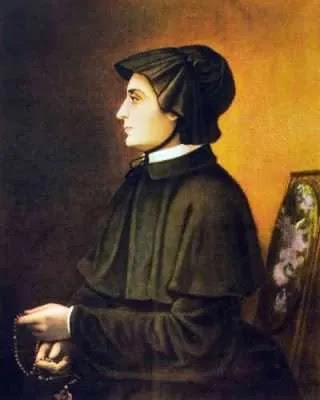
St. Elizabeth Ann Seton was a happily married woman with five children and a devoted husband. Tragically, during a trip to Italy, her husband died. During this time of bereavement, their Catholic friends showered her with such sympathy, help, and compassion that she decided to become a Catholic herself. A few years later, she started a grade school in Baltimore. From then on, her accomplishments included establishing an order that eventually laid the foundation for parochial schools in America.
Let us learn from St. Seton's Catholic friends who showed her so much caring humanity that she resolved to become one of them. When we are down and out, let us try to forget our sadness and, instead, work to make the world a better place to live in. When we see other people in need of succor and support, let us give them the care and love that they need, remembering that God will be with us – all the way.